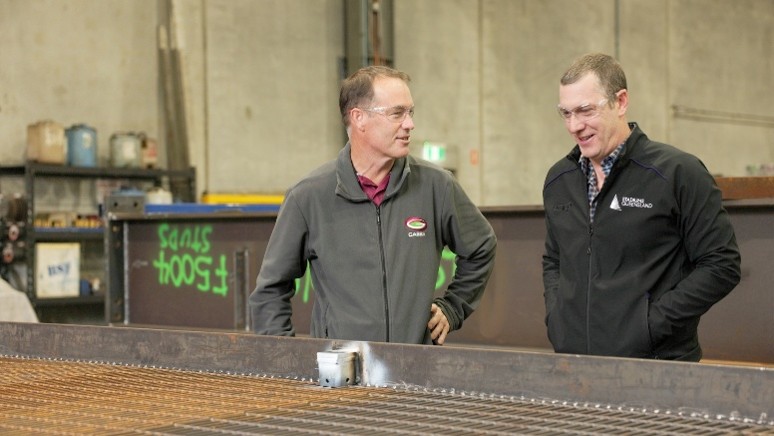
Led by industry-leading grounds experts, Stadiums Queensland will soon begin to curate cricket wicket infrastructure to be used at the new Brisbane Stadium.
The Gabba currently uses permanent in-situ wickets which take at least three years to develop to standards required for International Test Cricket, and if the same approach was taken at Brisbane Stadium, the venue would be unable to host international cricket until the 2034-35 cricket season at the earliest.
Ahead of the 2026 cricket season, our expert grounds team will develop and install a replacement wicket at The Gabba, which will sit alongside the existing in-situ wicket block, which will remain the primary infrastructure.
The new wicket will be curated by the expert grounds team at The Gabba, and eventually tested under professional cricket conditions, before being ready for installation at the new venue immediately following the Brisbane 2032 Exclusive Use Period.
This will guarantee proven, international-standard contemporary wicket infrastructure is available for the 2032-33 summer of cricket, and ensure the unique characteristics of The Gabba are preserved and The Gabba’s legacy lives on.
Stadiums Queensland Chief Executive Todd Harris said the organisation was well-placed to deliver the infrastructure.
“Our Head Groundsman has curated world-class wicket infrastructure throughout his esteemed career, so these wickets will benefit from expert hands and tested under top competition conditions,” Mr Harris said
“Transferring proven wickets between Test venues has never been done before, but ingenuity is needed, now, to ensure we don’t miss out on international cricket until 2035-36.”
The Gabba Grounds Manager David Sandurski said he was invested in preserving the unique history and cricket characteristics of The Gabba.
“It’s important we get this right, so we’ve explored a range of wicket block practices and technologies at venues across Australia and New Zealand, including the critical elements like tray design, clay type and depth, and turfing method,” Mr Sandurksi said.
“The new wicket will replicate both the dimensions of existing wickets and the make-up, with the same clay base, soil and turf, so we’ll be looking to refine it over time to reproduce the same pace and bounce The Gabba is famous for.”
Wicket timeline
- 2026: A full-sized wicket tray will be installed at The Gabba alongside the existing wicket block in September.
- 2027-28: The new wicket will be monitored and trialled during practice, intra-squad and domestic matches.
- 2028-31: The wicket will be tested under First-Class cricket conditions.
- 2032: Following the Brisbane 2032 Olympic and Paralympic Games, the contemporary wicket will be transferred to Brisbane Stadium.
- 2032-33: The wicket is expected to be ready to support the first international cricket season at Brisbane Stadium.
FAQS
Why are you installing this wicket infrastructure at The Gabba?
Traditional Test match quality wickets take at least three years curation to ensure they meet the standards required for international cricket, which would render Brisbane Stadium (Victoria Park) unable to host international cricket until the 2034-35 cricket season. This decision will allow us to transfer proven, international-standard contemporary wicket infrastructure to the venue, in time for the 2032-33 summer of cricket.
What sort of wicket will you look to produce?
The wicket will replicate the dimensions of existing Gabba wickets (24 metres long, 3.05 metres wide, 0.225 metres deep) and use the same clay base and same grass, with the aim of reproducing the same pace and bounce that The Gabba is famous for.
Will this impact cricket at The Gabba?
The existing in-situ wicket block will remain the primary wicket block in use at The Gabba, with the new wicket sitting alongside it. The new wicket will be curated for at least 12 months before any assessment of its performance. This new wicket will not be used for cricket matches until it has been proven under practice conditions, and use of the wicket at professional matches will be coordinated with Queensland Cricket and Cricket Australia.
What other venues use similar types of wicket infrastructure?
This infrastructure represents best practice nationally for new and existing oval stadiums, including MCG, Adelaide Oval, and Optus Stadium, with the SCG and The Gabba the only remaining Australian cricket venues using an in-situ wicket solution.